

Wallpaper or Wall Mural: Choosing the Feeling Before the Finish
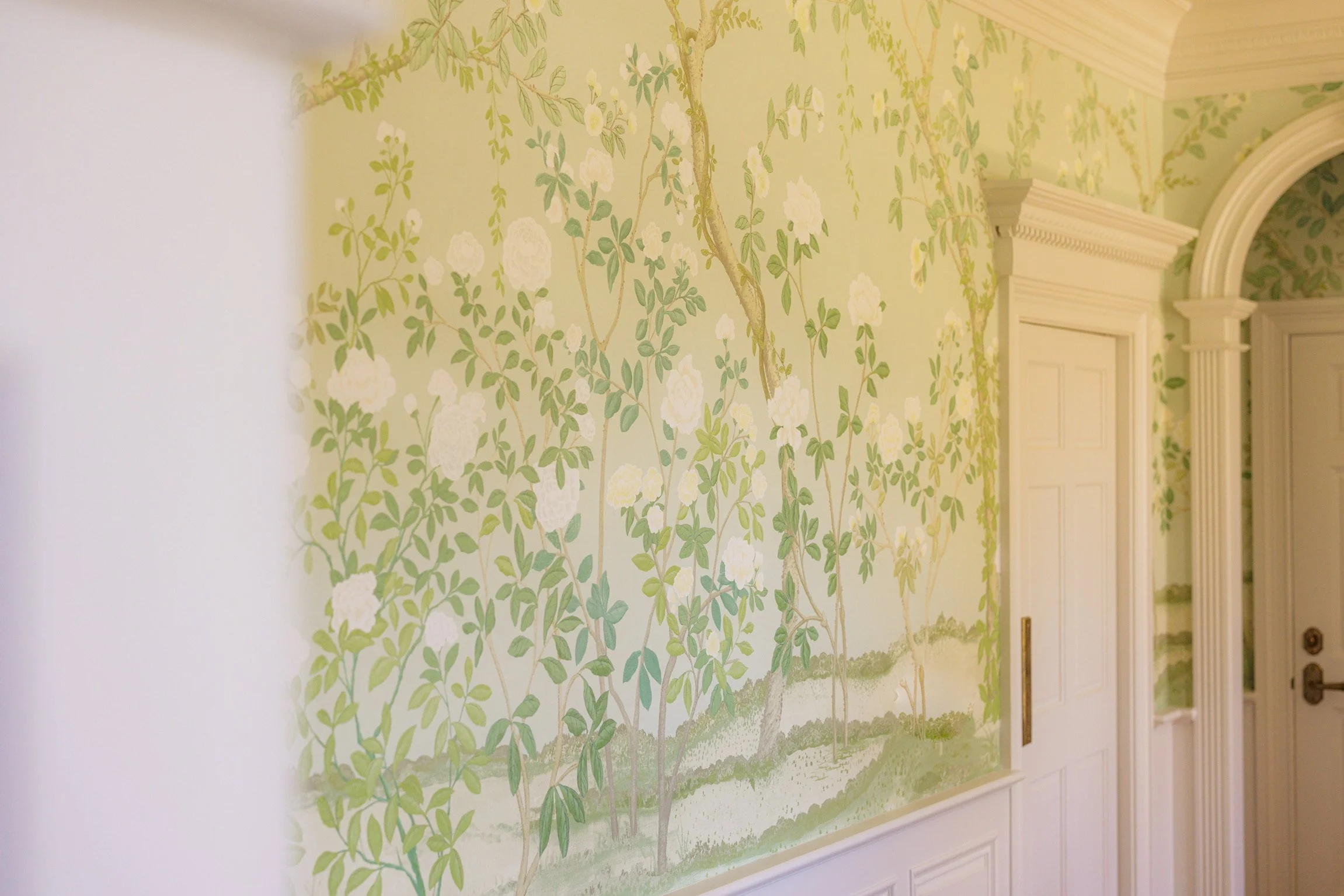
A wall is rarely just a wall.
It's the backdrop to quiet mornings, family dinners, children's imaginations, celebrations, conversations, and the routines that slowly become our lives. Long before we notice the furniture or the finishes, we're already experiencing the spaces that surround us every day. We rarely remember a room because of one chair, one light fixture, or one piece of artwork. We remember the feeling of being there.
That's what makes choosing a wall finish so much more than a design decision. It's choosing the surrounding sensation that becomes part of each moment.
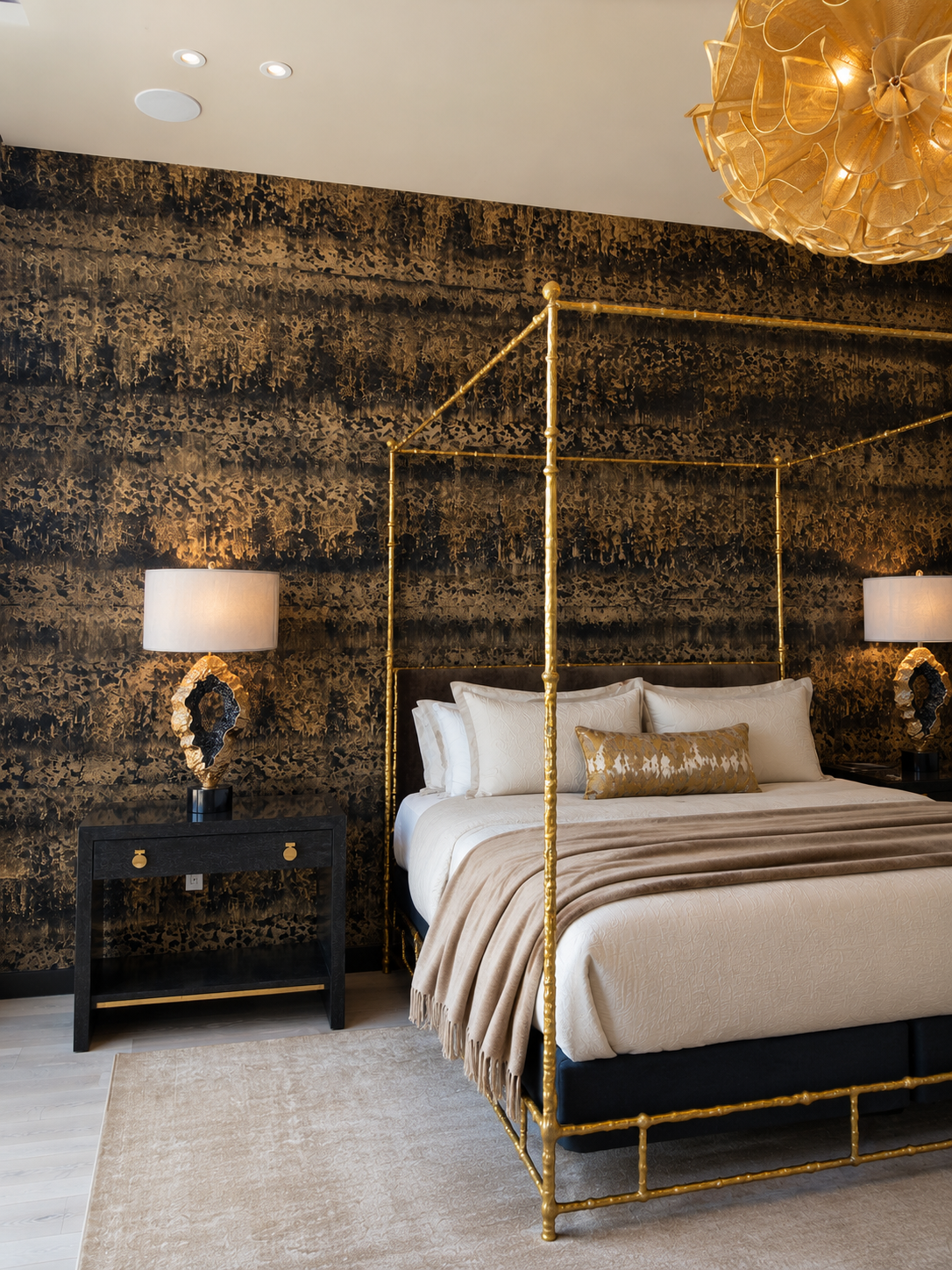
Great wallcoverings don't simply decorate a room. They become part of its story.
The question, then, isn't simply which wallcovering you prefer. It's what role you want the wall to play. Wallpaper and wall murals can both transform the experience of a room, but they do so by telling two very different stories.
Neither approach is inherently more impactful. In fact, both can be bold, understated, immersive, or dramatic. The distinction lies less in how much attention they command and more in how they shape the experience of the space.
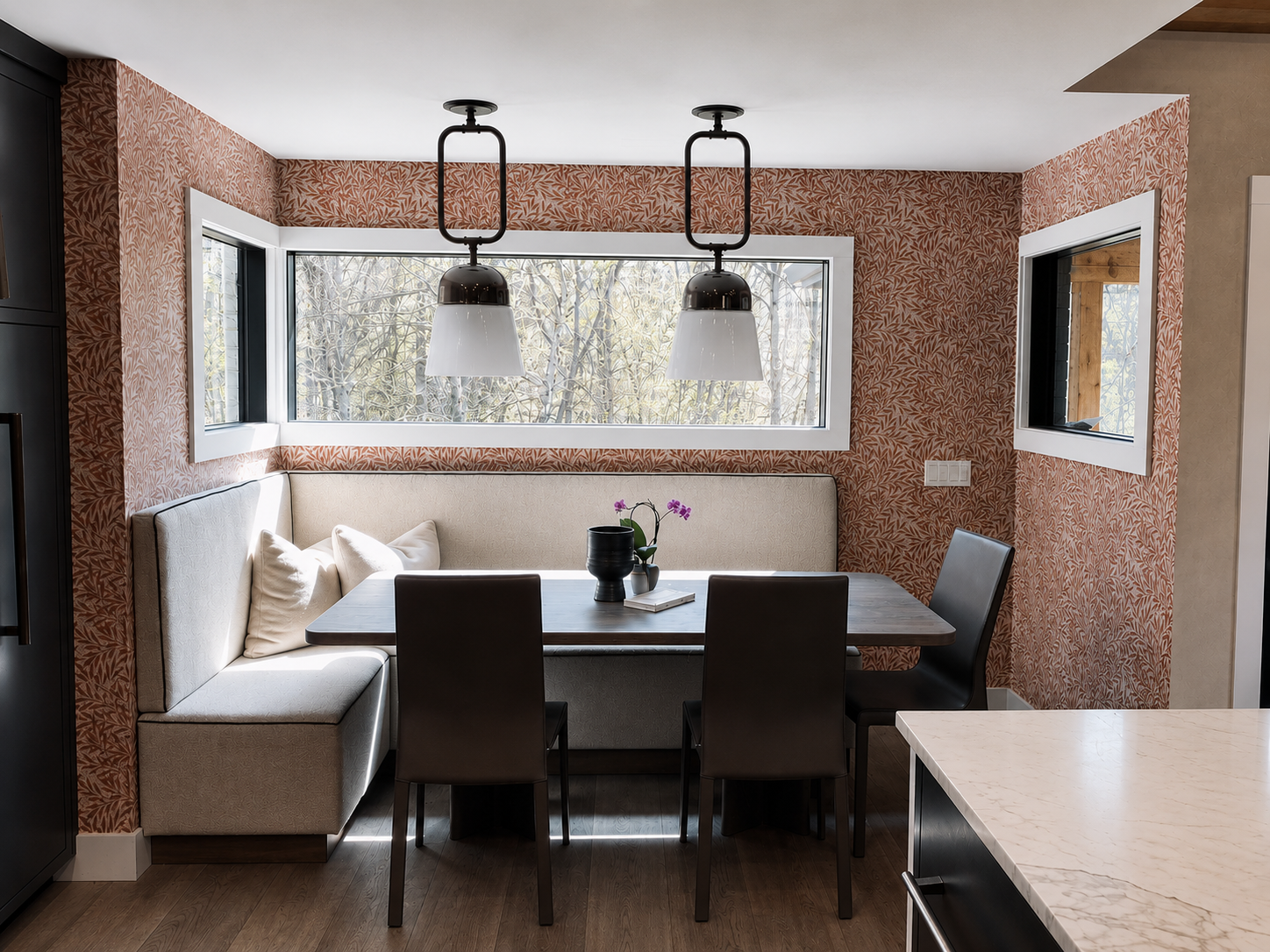
Wallpaper, through subtle textures, rich patterns, or repeating themes, can surround its occupants with design, feeling, and character in ways they may not consciously recognize. Whether subtle or bold, it often settles into the background, creating an immersive sense of place. A wall mural, on the other hand, has the ability to awaken the senses and evoke meaning. Much like a carefully chosen piece of art, it invites attention and often becomes part of the conversation.
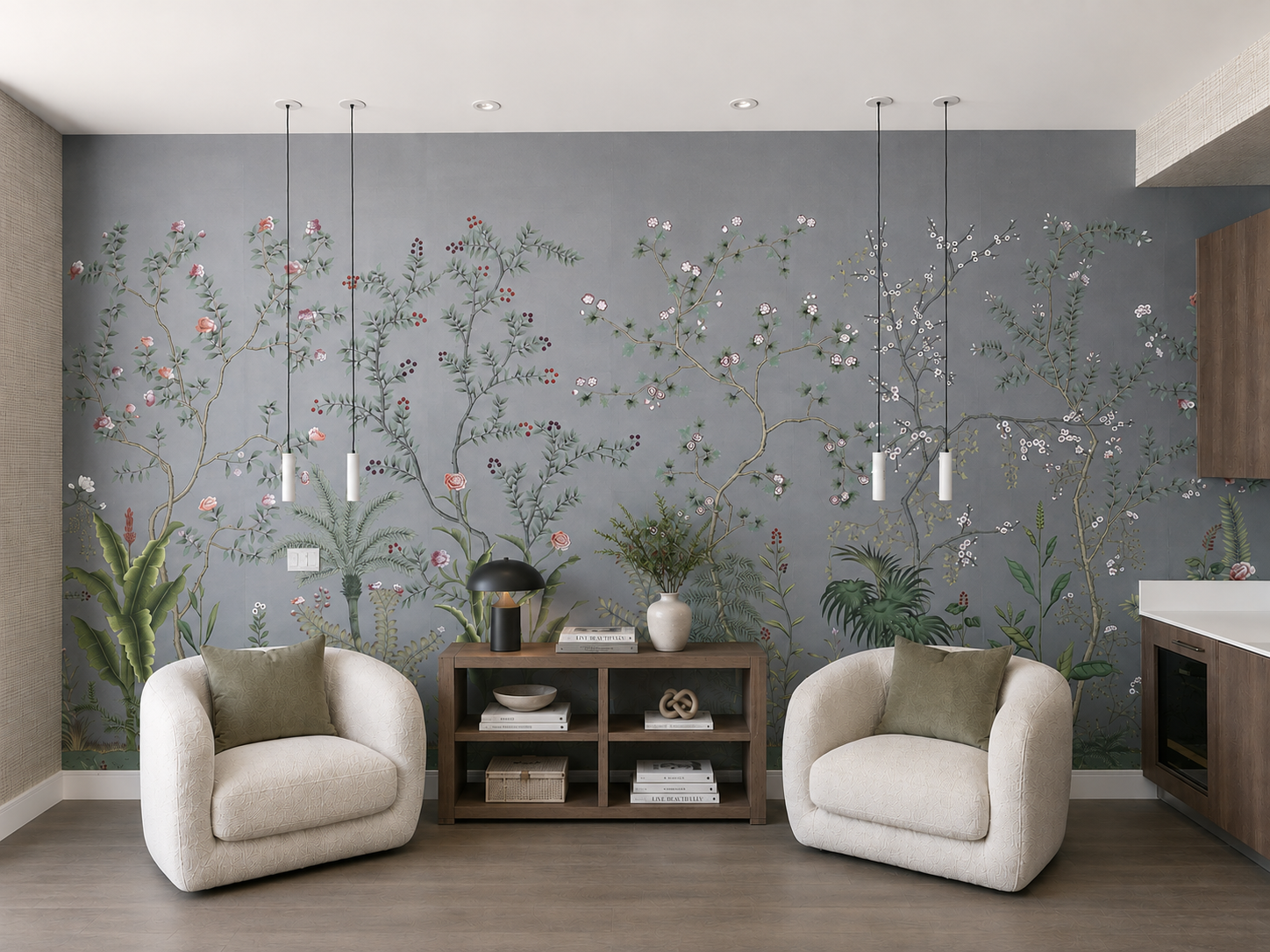
That difference becomes especially important when considering how a room is meant to be experienced. Wallpaper can carry across multiple walls, allowing pattern, texture, and color to establish a visual rhythm throughout the space. Even a dramatic selection can become part of the room’s larger composition once furnishings, artwork, and architectural details are layered around it.
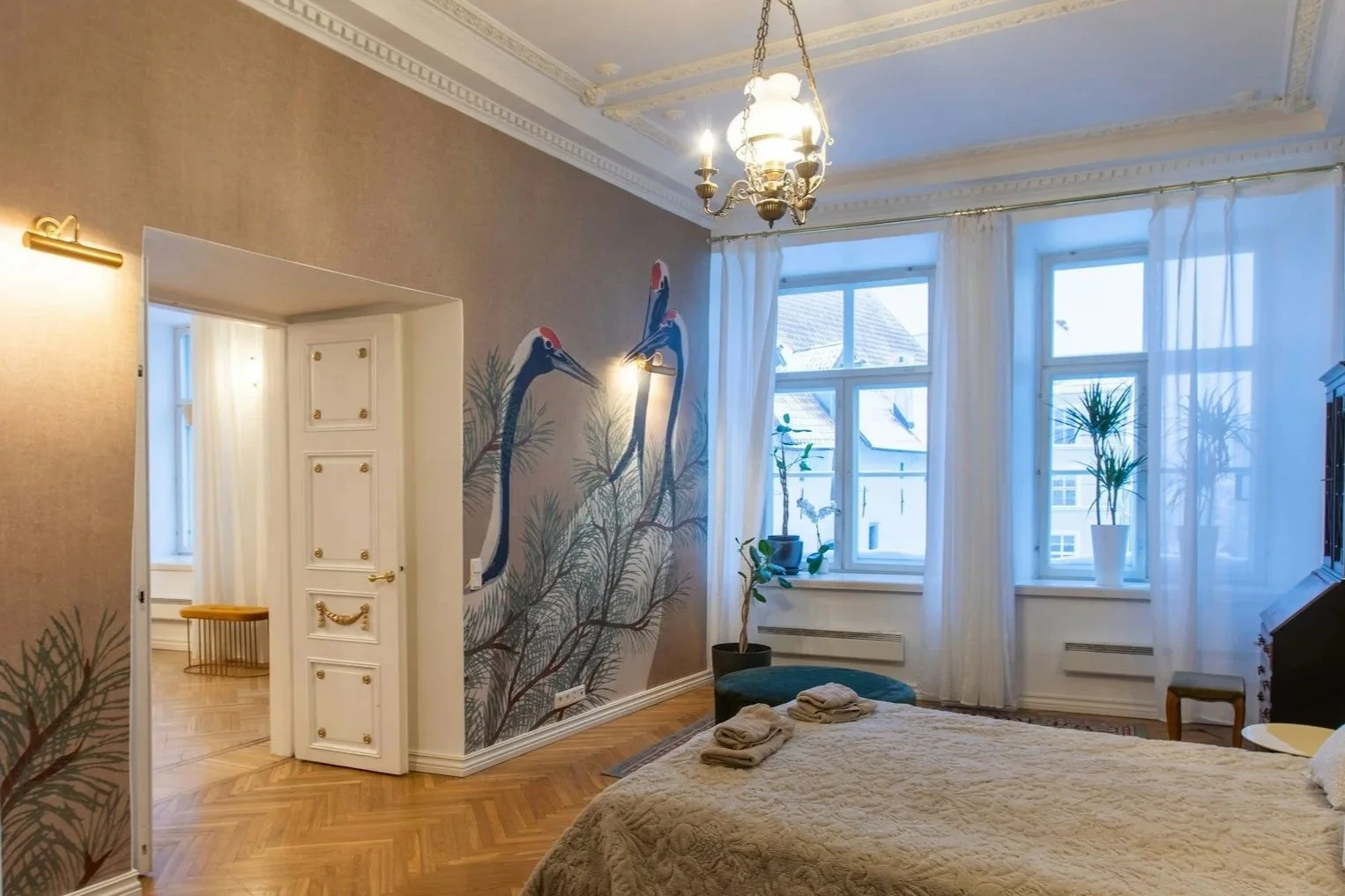
A mural asks for a different kind of consideration. Its scale and composition give the wall a more deliberate presence, much like placing an oversized work of art. The surrounding elements matter not only because they should complement the mural, but because sightlines, furniture placement, lighting, and architectural features can all influence how the image is revealed and experienced.
Our Perspective
What we’re seeing in current projects reinforces just how differently wallpaper and wall murals can shape the feeling of a room. Wallpaper continues to move beyond the expected, with ceiling applications appearing frequently in dining rooms, where the finish can truly envelop the space and influence its atmosphere from above. Wall murals are often taking a more artful approach, particularly in bedrooms, where we’re seeing them framed within picture moulding to create a deliberate visual moment.
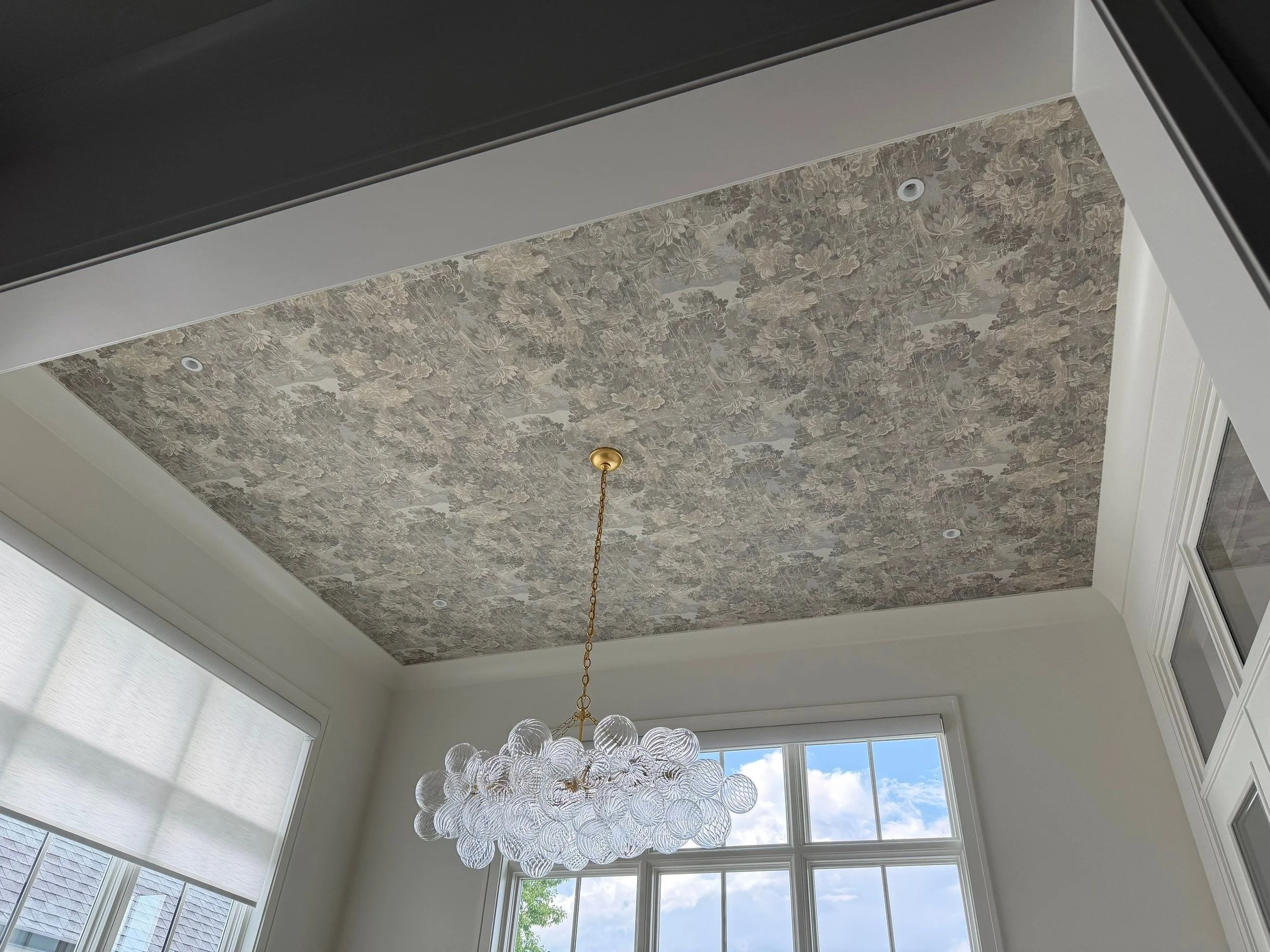
Where a wallcovering lives can be just as expressive as the wallcovering itself.
These applications may look very different, but each demonstrates how wallcoverings, when presented with intention, can be felt as much as they are seen.
The better question isn't whether wallpaper or a mural is the superior choice. It's what you want the room to feel like when someone walks inside.
In the end, the most successful choice is rarely about the wallcovering alone. The experience, the feeling, and the life unfolding within a space are the driving forces that will determine which finish will most enhance a particular environment.
Neither approach is simply decorative. At its best, each becomes an intentional part of how the space is understood and remembered.